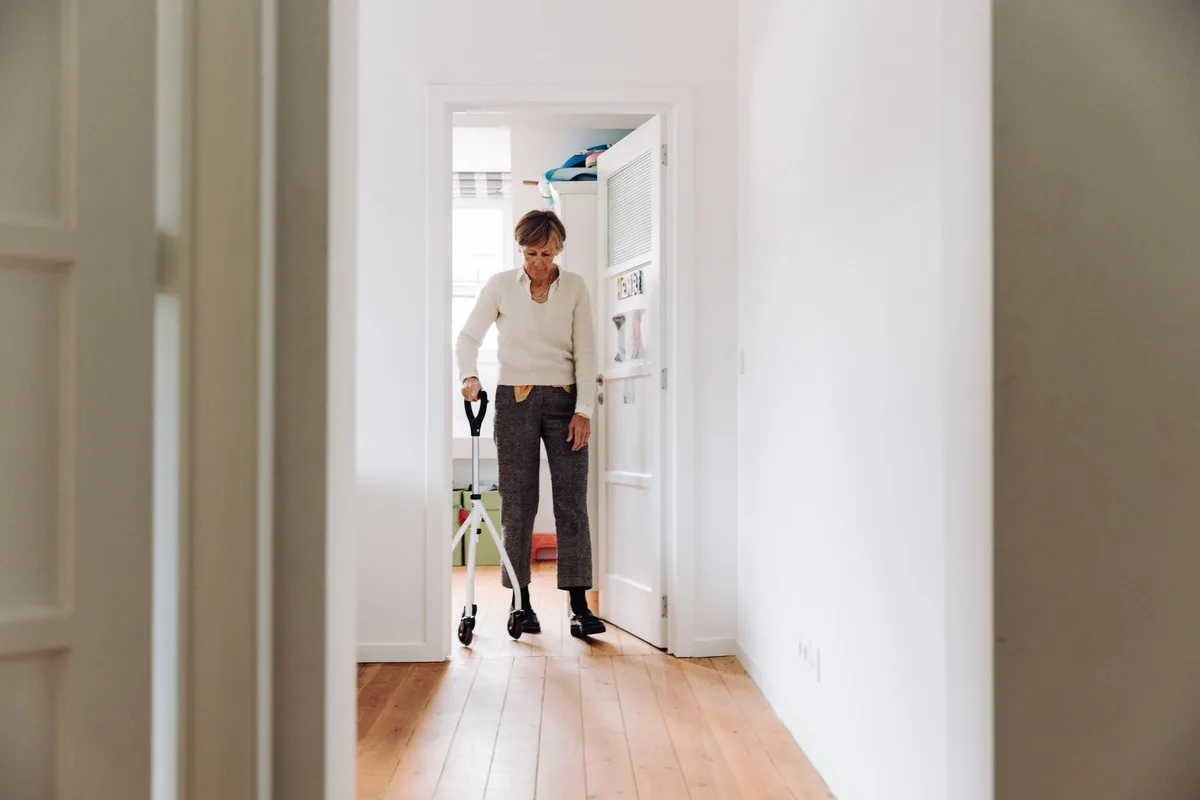
Your feet are constantly telling your brain where the floor is, how it slopes and when to shift your weight. When those signals get weaker, every step takes a bit more guesswork.
That is one reason falls become more common with nerve problems in the feet. The good news is that a few changes at home can take much of the risk away.
Insider Tip Many falls happen at home, often on the way to the bathroom or on stairs. Good lighting, clear floors, something solid to hold and regular balance practice can help you stay on your feet.
Why numb feet affect balance
Balance depends on three helpers: your eyes, your inner ear and the feeling in your feet. With neuropathy, the feet send less information, so you lean harder on your eyes. That is why falls often happen in dim light, like a dark hallway at night.
Room by room
Floors and hallways
Remove throw rugs or tape them firmly down. Keep cords, shoes and clutter off walking paths.
Stairs
Use sturdy handrails on both sides and keep the steps well lit, with a switch at the top and the bottom.
Bathroom
Add grab bars by the toilet and in the shower, a non-slip mat, and a shower chair if standing is tiring.
Bedroom
Keep a lamp within reach of the bed and use night lights along the path to the bathroom. Sit for a moment before you stand up.
Daily habits that help

- Wear well-fitting shoes with thin, firm, non-slip soles, even indoors.
- Stand up slowly, especially after sitting or lying down.
- Keep often-used items on shelves between hip and shoulder height.
- Practice simple balance moves, like standing on one foot while holding a counter.
- Ask about a class such as tai chi, which is linked to fewer falls in older adults.
Walk through your home tonight with the lights off except the ones you would really use. Wherever you feel unsure, that is where you need more light.
When to talk to your doctor
Tell your doctor if you have fallen, nearly fallen, or feel unsteady. Ask whether any of your medicines can cause dizziness or drowsiness, but do not stop any on your own. A physical therapist can build a balance plan for you. Get emergency care after a fall with a head injury, severe pain or trouble getting up.
Making your home safer is not giving in. It is how you keep moving freely for years to come.