You wake up groggy, drag yourself through the morning, then lie awake at night wondering why sleep will not come. It can feel like your body has lost its sense of time.
One of the simplest fixes costs nothing and takes about ten minutes: step outside soon after you wake up.
The one takeaway Bright outdoor light in the first hour after waking is the strongest signal your body clock gets. A short daily dose may help you feel more alert in the morning and sleepier at the right time at night.
How light sets your body clock
Deep in your brain sits a small master clock that runs on a roughly 24 hour cycle. On its own, it drifts. Light hitting your eyes in the morning is what resets it each day.
That morning signal starts a countdown. Many hours later, in the evening, your body begins releasing melatonin, the hormone that makes you sleepy. When the morning signal is weak, the whole schedule can slide later, and you end up tired in the day and wired at night.
Why outdoor light beats indoor light
Indoor lighting is far dimmer than it looks. Even on a cloudy day, the light outside is many times brighter than a well lit kitchen. As we age, the lens of the eye also lets in less light, so older eyes may need a stronger dose to get the same message.
Research suggests that regular morning light is linked to steadier sleep and better mood, especially in the darker months.
How to fit it in
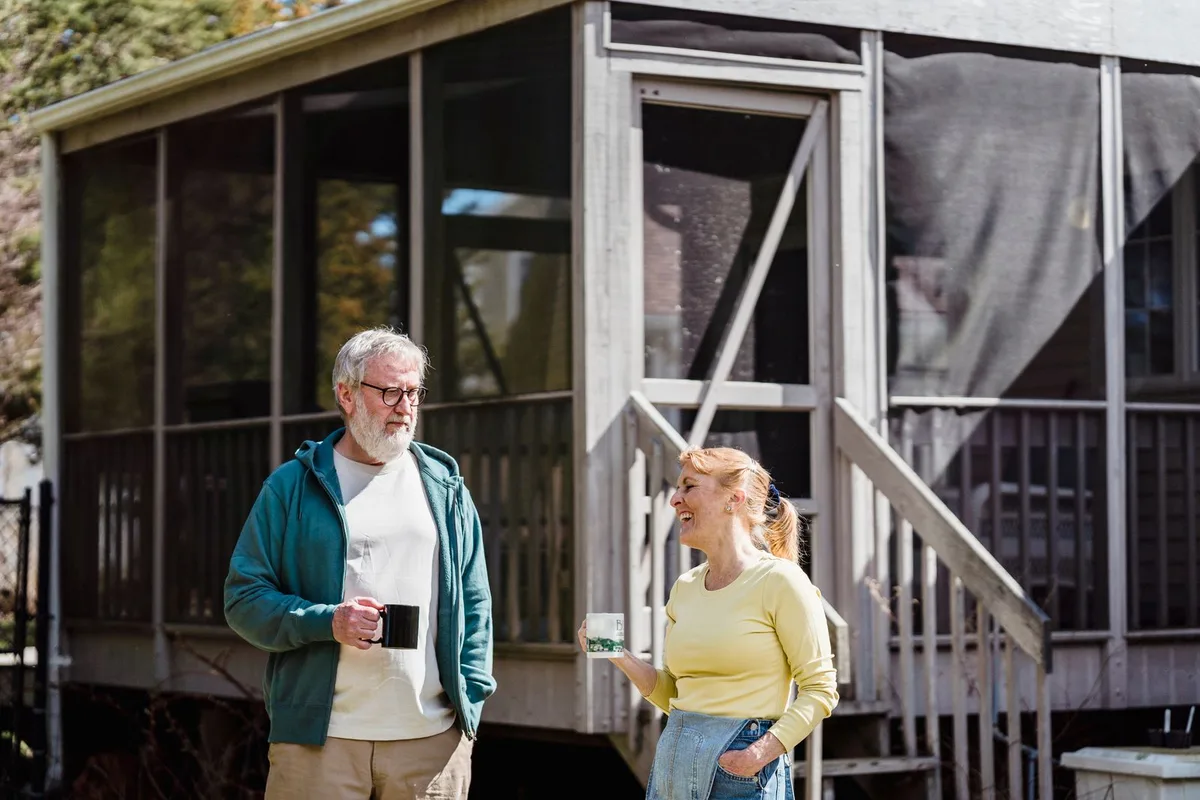
- Drink your coffee or tea on the porch, balcony or front step.
- Take a short walk around the block before breakfast.
- On cold days, sit by a wide open window, though outdoors is better.
- Aim for 10 minutes on bright days and 20 to 30 on gray ones.
You do not need to look at the sun. Just be outside with your eyes open and your face uncovered. Regular glasses are fine.
Pair it with something you already do every morning, like letting the dog out or getting the newspaper, so it happens without thinking.
When to talk to your doctor
Never stare directly at the sun. If you have an eye condition, take medicine that makes you sensitive to sunlight, or have a history of skin cancer, ask your doctor how much sun is right for you. If low mood, trouble sleeping or daytime exhaustion lasts more than two weeks, talk to your doctor rather than relying on light alone.
Ten minutes of morning light is a small habit. Over a few weeks, it can quietly reset the rhythm of your days.