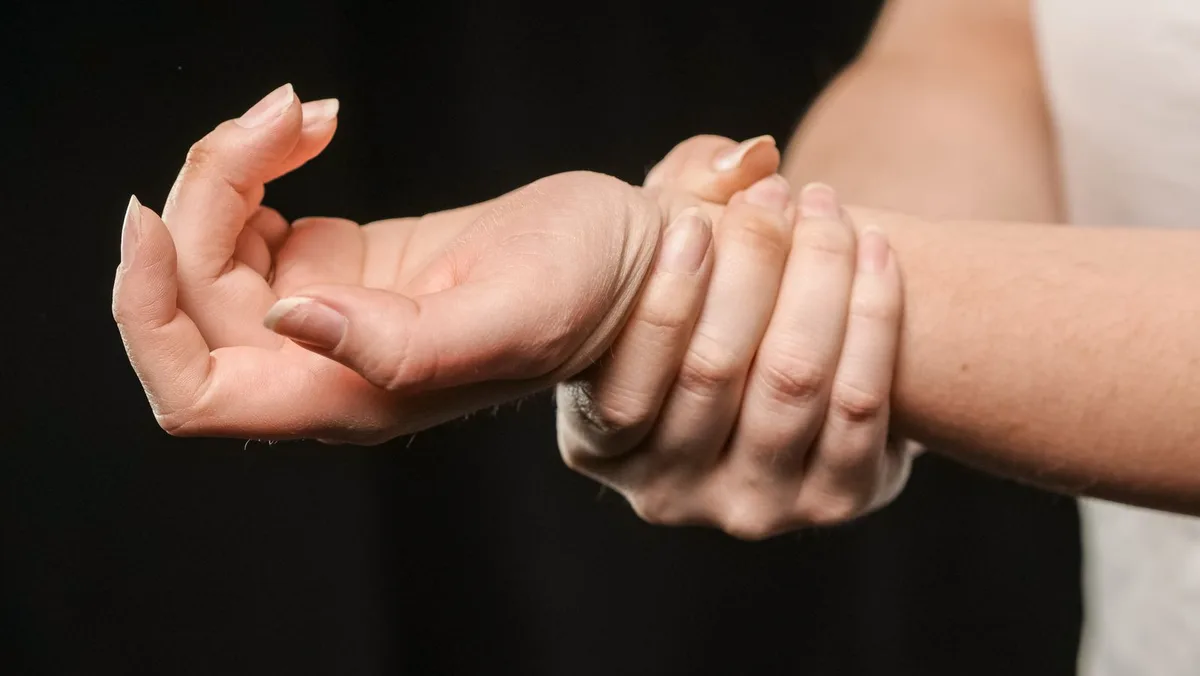
It is 3 a.m. and you wake up because your hand feels thick and buzzy, as if it belongs to someone else. You shake it, flex your fingers, and slowly the feeling comes back.
If this happens now and then, sleep position is often the reason. If it happens most nights, it is worth looking closer.
Insider Tip Night numbness in the thumb, index and middle fingers often points to carpal tunnel syndrome. Numbness in the little finger, the whole hand, or both hands and feet suggests other causes worth checking with your doctor.
Carpal tunnel: the usual suspect
The carpal tunnel is a narrow passage in your wrist. The median nerve runs through it to the thumb side of your hand. When the space gets crowded, the nerve is squeezed.
Many people sleep with their wrists curled, which narrows the tunnel even more. That is why carpal tunnel symptoms are often worst at night or first thing in the morning. Typical signs are tingling in the thumb and first two or three fingers, a weaker grip and dropping things. Shaking the hand often brings relief.
It is linked to repetitive hand use, diabetes, an underactive thyroid, arthritis in the wrist and fluid retention.
Other causes to consider

- Sleeping on your arm or elbow: pressure on the ulnar nerve at the elbow numbs the ring and little fingers.
- A pinched nerve in the neck: numbness may travel down the arm and come with neck stiffness.
- Peripheral neuropathy: when both hands and both feet tingle, causes like diabetes or low vitamin B12 move up the list.
What may help at night
- Try a wrist splint that keeps the wrist straight while you sleep.
- Avoid sleeping with your hands tucked under your pillow or head.
- Keep your elbows fairly straight rather than tightly bent.
- Take short breaks during the day from gripping, typing or tool use.
A simple test: notice which fingers go numb. Write it down and tell your doctor. That one detail narrows the cause a lot.
When to talk to your doctor
See your doctor if numbness happens most nights, lasts into the day, or comes with weakness or dropping things. Long pressure on a nerve can cause lasting damage. Get emergency help for sudden numbness on one side of the body.
Your hands do a lot for you all day. A few changes at night, and a clear answer about the cause, can help them rest too.